🎐 XC Scribbles 149 - ✨Memory Is a Resonance of the Senses
Every time I try to remember where I once read a particular sentence, what comes to mind is never the line itself, but the entire book.
Was it on the left page or the right? Near the corner or closer to the center? Was the paper slightly yellowed or still bright white? Was the typeface thick or delicate? Sometimes I can even recall a faint scent from the pages.
It feels less like recalling text and more like locating something in space.
A Kindle never gave me that sensation. I actually bought one twice, and both times I eventually went back to printed books.
Because a physical book has weight. There is the soft sound of pages turning. There is the friction of fingertips brushing paper. There is the quiet scent that time leaves behind.
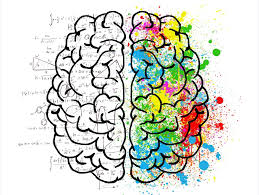
When I remember something, it is not just my brain searching. My whole body is helping retrieve the file.
Smell is always the fastest trigger.
You pass by a small restaurant and suddenly the smell of frying oil rushes up. A certain angle of light at a street corner. A fragment of music that suddenly vibrates through you.
That strange sense of familiarity is not something you think into existence. Your senses simply start loading the search.
It feels as if every cell mobilizes, while somewhere in the background the system flips through old records.
You suddenly tear up. Your chest tightens. Or you feel an inexplicable moment of happiness. You don’t know why but your body does.
Emotion is not always created in the present moment. Often it is memory resonating.
Many people underestimate something fundamental: we do not store memories only in the brain. We archive them throughout the body.
Vision.
Sound.
Smell.
Touch.
Even temperature, humidity, and the density of the air.
The weight of a physical book is actually a coordinate. It gives memory a physical location.
Digital books are too clean, too flat, too frictionless. Memory has nothing to grip.
Emotion is not really a rational response. It is sensory replay.
Sometimes a scene moves you to tears not because it is objectively touching, but because it collides with an old file somewhere inside you.
We think we are reacting to the present. In truth, the past is being awakened.
Perhaps what our bodies carry is not only our own memories, but also inherited sensitivities passed down through generations, genetic traces within the nervous system.
Some scenes feel mysteriously familiar. Maybe not because we have lived them before, but because our nervous system is wired to resonate with them.
Memory has never truly been a database. It is more like an instrument.
When a certain frequency strikes it, it begins to sound on its own. And we simply sit at the front desk of consciousness, crying for it, smiling for it, letting it beat through our chest.
In neuroscience, smell is the only sense that connects directly to both the emotional center (the amygdala) and the memory hub (the hippocampus).
That is why when a scent appears, certain memories we cannot consciously recall can suddenly pull us entirely back into another moment.
It is a neural pathway lighting up.
Stone carvings → bamboo slips → paper → digital clouds.
Every transformation of medium rewrites how humans remember.
Stone erodes; Bamboo decays; Paper yellows, but they all disappear slowly. Digital memory is different. It can vanish instantly.
That is not merely a change in storage format. It is a change in the mode of existence itself.
If printed books disappear, history will soon turn its page as well.
Paper is a medium with resistance. It gives memory a physical presence. Digital memory has no weight; No texture; No volume; No page numbers to anchor spatial memory.
The way we remember will inevitably change. Future readers may not recall “the left page or the right page.” They may only remember a search keyword.
Spatial memory may weaken. Associative searching will grow stronger but we may lose the joy of accidentally stumbling upon something unexpected.
The serendipity of paper books is an important source of creativity.
Digital search is precise but it only gives you what you ask for. Algorithms and data feeds show us what we already want to see. The structure tightens, the paths narrow.
Human beings have always outsourced abilities. Fire meant we no longer needed thick fur. Agriculture meant we no longer needed to hunt constantly. Printing meant knowledge no longer depended on oral memory.
Every technological step weakens some capacities, while strengthening others.
The problem is not degeneration. The problem is monoculture. Because in a single moment, every digital thing can simply disappear.
—— XC Scribbles · 壹佰肆拾玖 CXLIX 💬
‹ 🎐 XC Scribbles 150 - ✨Who Is Playing Us
🎐 XC Scribbles 148 - ✨ The Distance Built into Language ›