🎐 XC Scribbles 142 - ✨ Why Isn’t It Called a North-Pointing Needle?
A few days ago, I bought a compass.
But it didn’t seem very accurate. No matter how I tried to align it with the other compasses I had, they never quite matched. That was when I started wondering which one is actually correct?
A friend laughed and said, “Doesn’t your phone already have a compass? Why bother buying another one?” I paused. That’s true. But then another thought surfaced how do I know my phone is accurate?
Even if you’re wearing a Rolex, time still drifts slightly. So why should I place absolute trust in a black box that shows me direction, while I cannot see the magnetic field behind it, nor the calibration process that makes it work?
At times, this habit of doubting everything feels like unnecessary self-trouble. I kept staring at the needle. The red-painted tip on each compass was clearly pointing in the same direction.
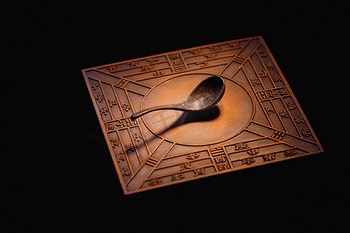
If it points north, why don’t we simply call it a “north-pointing needle”? The question made me laugh at first. But the more I thought about it, the more intriguing it became. When I looked into historical sources, I discovered that the earliest prototype of the Chinese compass was not designed to point north at all. It was called the “Si Nan” (司南), a spoon-shaped instrument placed on a smooth bronze plate. The handle of the spoon would naturally settle pointing south.
It was not originally invented for travel. It was created for orientation, order, and establishing a sense of position within space.
In traditional Chinese culture, south holds symbolic weight. Facing south meant facing light and warmth. Emperors historically sat facing south, symbolizing authority and alignment with the natural order. “South” became the reference point. North was simply what lay behind.
So even after technology advanced and magnetic compasses stabilized in pointing north, the name remained rooted in that earlier worldview.
The compass is not instructing me where to look. It is reminding me from which position I am looking.
That realization changed something. Perhaps it is not urgent to call it a “north-pointing needle” because direction itself is never absolute. We can calibrate instruments, compare readings, align markings but the final step always returns to us.
Where am I standing? Which way am I facing? Which version of “accuracy” do I choose to trust?
A compass can reveal magnetic orientation. It does not guarantee that I will not lose my way.
And once I understood that, the slight discrepancy between my compasses bothered me far less.
Maybe what truly needs calibration is not the needle, not the phone, not even time itself but our attachment to precision.
—— XC Scribbles · 壹佰肆拾貳 CXLII 🧭
‹ 🎐 XC Scribbles 143 - ✨ Maybe I Only Needed an Explanation
🎐 XC Scribbles 141 - ✨ Wait, and Look Once More ›