🎐 XC Scribbles 133 - ✨ Moving by Will, Staying by Choice
Every nation possesses its own cultural soul. The deeper I dig, the more I find the depths of Chinese culture to be both terrifyingly profound and hauntingly beautiful.
Curiously, I didn't arrive at this understanding through any "orthodox" path. My comprehension of Chinese heritage was formed almost entirely by taking a long detour through Japanese culture.
Japan possesses a global "allure" minimalist, restrained, and serene. It etches itself into the Western psyche with ease through Shodo (calligraphy), Chado (tea), and Zen. Yet, the more I delved into these paths, the more I realized they all pointed back to ancient China.
Even chopsticks hold the answer. Chinese chopsticks— square at the top, round at the base, and precisely 7.6 inches long, symbolize the Square Earth and Round Heaven, and the "Seven Emotions and Six Desires" of humanity. Japanese chopsticks mirror the logic of cutlery: round-tailed and sharp-tipped for piercing. Korean chopsticks are flat and metallic, designed not to roll away and to withstand the heat of the grill. A single pair of chopsticks lays three distinct civilizations on the table.
Tracing Japanese Ikebana back to the vases of the Tang Dynasty, I often lose track of whether the flower bestows beauty upon the vase, or the vase empowers the charm of the flower. It is the Wave-Particle Duality of aesthetics.
I’ve always been captivated by the Kanji in Japanese culture— Wabi-sabi, Mono no aware, Ikigai, Yugen, Yohaku. Yet recently, I was utterly struck by the underlying architecture of a single Chinese term:
— 自由自在 (Zì yóu zì zài: Freedom and Ease)
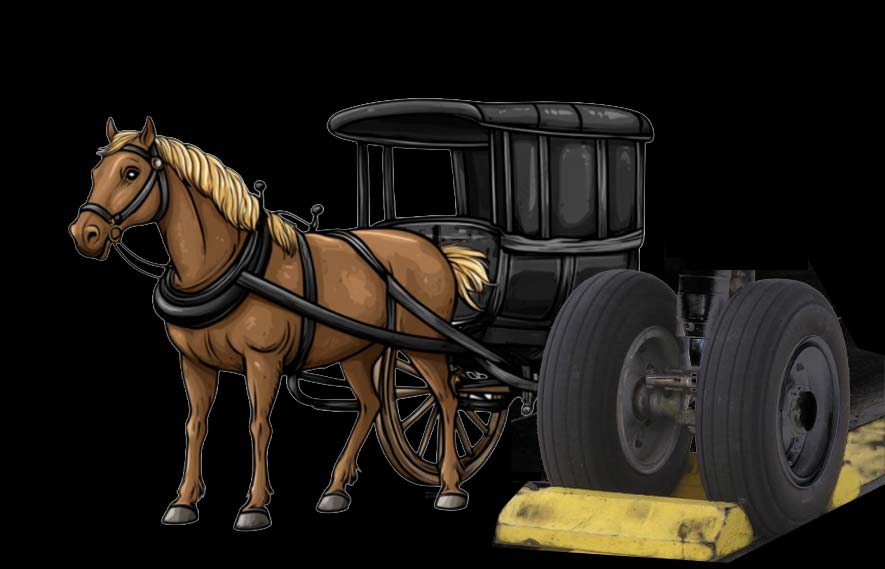
"由" (Yóu) originally referred to the wheel. "在" (Zài), I discovered, was the name of the wooden block placed before and behind a wheel to keep it stationary.
"在" originally meant STOP. Thus, to be "Self-Free and Self-Stationary" (Ziyu Zizai) isn't about a mindless sprint; it is the power to move by one’s own will and to stop by one’s own command.
This realization was subversive. I had always thought "自在Zizai" meant comfort or lack of restraint. I never expected one character to pierce through an entire philosophical system. It’s like the characters for "Loyalty" (忠) and "Trouble" (患) both speak of a "Center" (中). A field can have only one center; add another, and it becomes an imbalance, a "trouble."
(中庸)Zhong-yong (The Middle Way) is not a conservative compromise; it is the deepest substrate of Chinese culture. The deeper I dig, the more intoxicatingly formidable it becomes.
—— 🎐 XC Scribbles · 壹佰參拾參 CXXXIII 🌪️
‹ 🎐 XC Scribbles 134 - ✨ The Moment the Tool Fades Away
🎐 XC Scribbles 132 - ✨ The Giant Green Caterpillars on My Screen ›